

Government Subsidy on Rooftop Solar in India
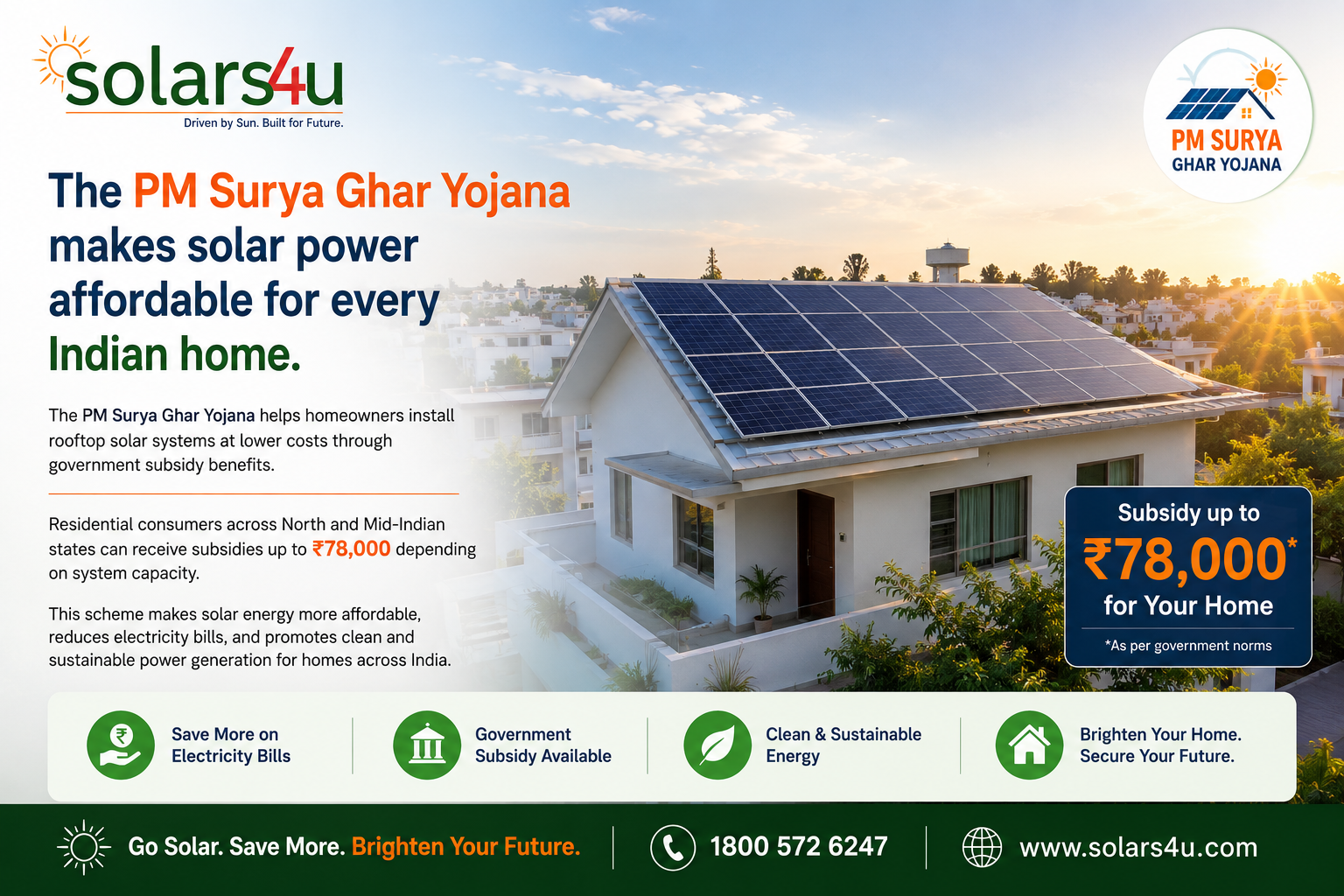
"The PM Surya Ghar Yojana helps homeowners install rooftop solar systems at lower costs through government subsidy benefits. Residential consumers across North and Mid-Indian states can receive subsidies up to ₹78,000 depending on system capacity. This scheme makes solar energy more affordable, reduces electricity bills, and promotes clean and sustainable power generation for homes across India."
Government Subsidy on Rooftop Solar in India
Solar energy is becoming increasingly popular in India as people look for ways to reduce electricity bills and adopt clean energy solutions. To encourage rooftop solar adoption, the Government of India launched the PM Surya Ghar Yojana, which provides financial assistance to residential consumers installing rooftop solar systems.
This scheme helps homeowners reduce installation costs and enjoy long-term savings through clean and renewable energy.
What is PM Surya Ghar Yojana?
PM Surya Ghar: Muft Bijli Yojana is a central government scheme launched to promote rooftop solar systems in residential homes across India.
The main goals of the scheme are:-
Reduce household electricity bills
-
Promote renewable energy adoption
-
Provide up to 300 units of free electricity
-
Support India’s clean energy mission
The government aims to install rooftop solar systems in millions of homes under this initiative.
Exact Central Subsidy Amount (Applicable Across India)
The subsidy under PM Surya Ghar Yojana is fixed for all states in India, including North and Mid-Indian states like Rajasthan, Uttar Pradesh, Delhi, Haryana, Punjab, Madhya Pradesh, Bihar, and Chhattisgarh.
| Solar System Size | Central Subsidy Amount |
|---|---|
| 1kW | ₹30,000 |
| 2kW | ₹60,000 |
| 3kW and Above | ₹78,000 (Maximum) |
Additional State Subsidy Benefits
Some states may provide additional incentives along with the central subsidy.
Examples of Additional State Benefits:
- Delhi may offer extra state incentives under state solar policies
- Uttar Pradesh has additional promotional support in some cases
- Gujarat and Rajasthan actively support rooftop solar adoption
Eligibility Criteria for Rooftop Solar Subsidy
To apply for the subsidy, applicants must fulfill these conditions:
- Must be an Indian citizen
- Must own a residential property
- Should have a valid electricity connection
- Rooftop should be suitable for solar installation
- Solar system must be installed through an approved vendor
Step-by-Step Subsidy Process
Step 1: Online Registration
Register on the official rooftop solar portal.
Step 2: Choose Approved Vendor
Select a government-approved solar EPC company for installation.
Step 3: Rooftop Solar Installation
The vendor installs the solar system according to government standards.
Step 4: Net Metering & Inspection
The electricity department verifies the installation and installs a net meter.
Step 5: Subsidy Transfer
After approval, the subsidy amount is transferred directly to the consumer’s bank account through DBT (Direct Benefit Transfer).
Documents Required
Common documents required include:
- Aadhaar card
- Electricity bill
- Bank account details
- Property documents
- Passport-size photograph
- PAN card
Approximate Cost After Subsidy
| System Size | Approximate Cost Before Subsidy | Subsidy | Estimated Final Cost |
|---|---|---|---|
| 1kW | ₹65,000 – ₹90,000 | ₹30,000 | ₹35,000 – ₹60,000 |
| 2kW | ₹1.2 – ₹1.5 lakh | ₹60,000 | ₹60,000 – ₹90,000 |
| 3kW | ₹1.8 – ₹2.5 lakh | ₹78,000 | ₹1 – ₹1.7 lakh |
| 5kW | ₹2.8 – ₹4 lakh | ₹78,000 | ₹2 – ₹3.2 lakh |