Solar Panel Maintenance Tips for Better Performance
26 May 2026Admin
Solar Panel Maintenance Tips for Better Performance
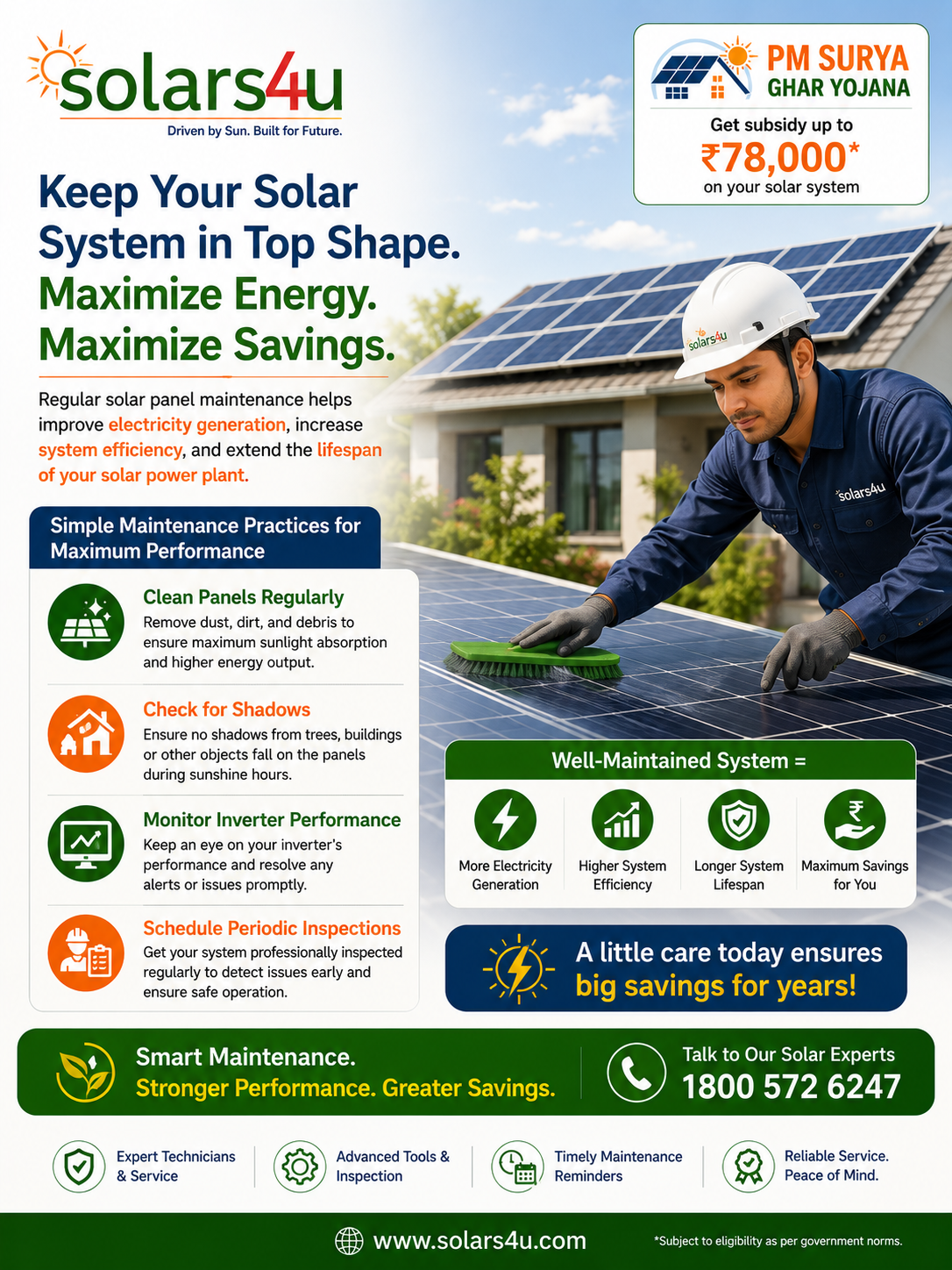
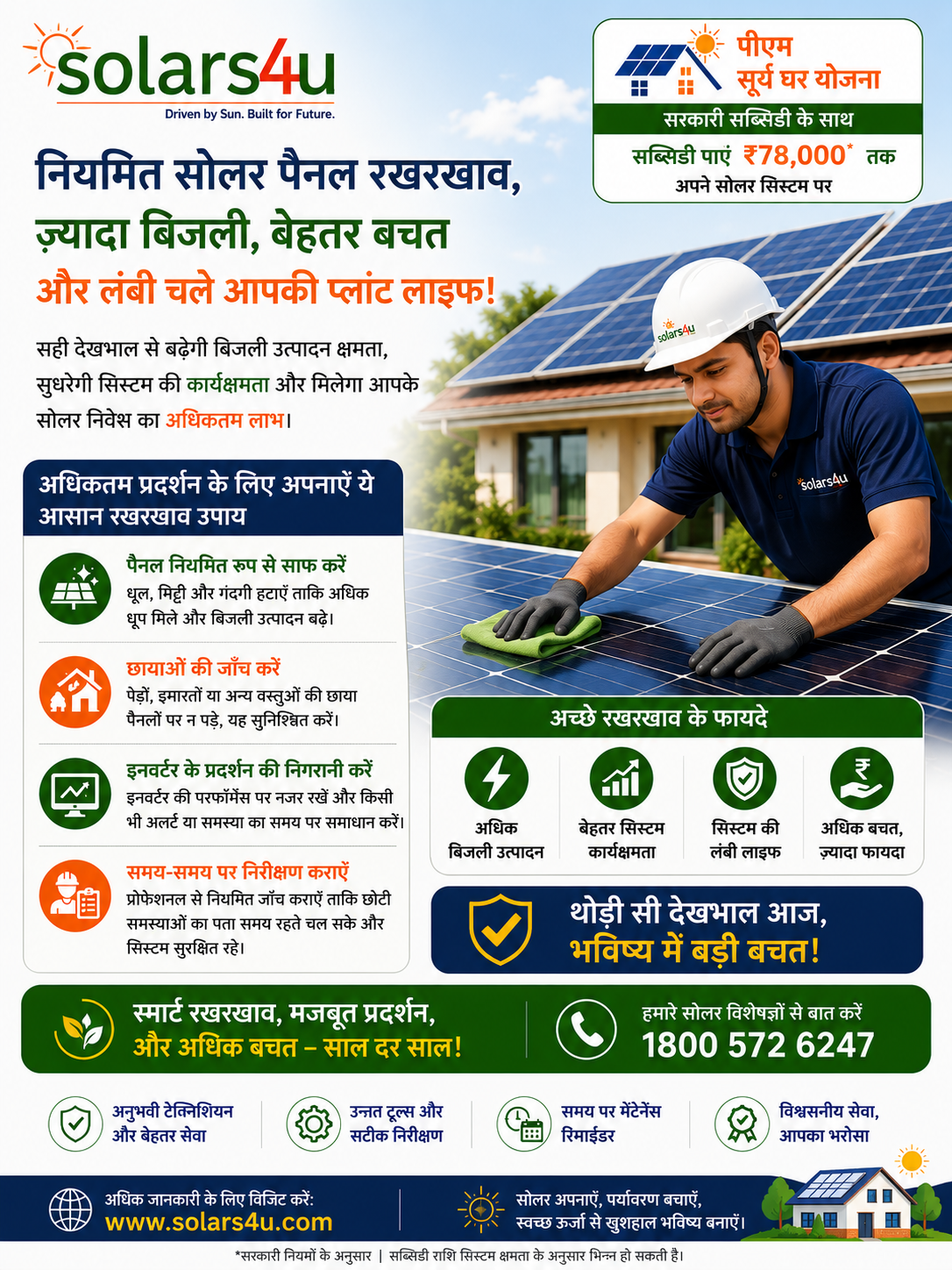
"Regular solar panel maintenance helps improve electricity generation, increase system efficiency, and extend the lifespan of your solar power plant. Simple practices like cleaning panels regularly, checking for shadows, monitoring inverter performance, and scheduling periodic inspections ensure maximum energy output and long-term savings from your solar investment."
Solar Panel Maintenance Tips for Better Performance
Solar panels are a long-term and low-maintenance energy solution, but regular cleaning and proper care are important to maintain maximum efficiency and power generation. Dust, dirt, bird droppings, and weather conditions can reduce solar panel performance over time. In this blog, we will discuss simple solar panel maintenance tips that help improve efficiency and increase the lifespan of your solar system.Why Solar Panel Maintenance is Important Proper maintenance helps:
Increase electricity generation
Improve system efficiency
Reduce energy losses
Extend panel lifespan
Prevent technical problems
Maximize return on investment
Even a small layer of dust can reduce solar output significantly.1. Clean Solar Panels Regularly Dust and dirt accumulation is one of the main reasons for reduced solar performance. Cleaning Tips:
Clean panels every 15–30 days in dusty areas
Use soft water and a microfiber cloth or sponge
Clean early morning or evening when panels are cool
Remove bird droppings and leaves immediately
Avoid using:
Hard brushes
Harsh chemicals
High-pressure water
Regular cleaning helps panels absorb maximum sunlight.2. Check for Shadows on Panels Shadows from:
Trees
Buildings
Water tanks
Antennas
can reduce electricity generation. Trim nearby branches and ensure panels receive direct sunlight throughout the day.3. Inspect Wiring and Connections Loose or damaged wiring may affect system performance and safety. Check periodically for:
Loose cables
Burn marks
Corrosion
Damaged connectors
Always contact a professional technician for electrical repairs.4. Monitor Solar System Performance Most modern solar systems come with monitoring features. Track:
Daily electricity generation
Inverter performance
Sudden drops in output
If generation decreases unexpectedly, the system may require inspection.5. Keep the Area Around Panels Clean Leaves, dust, and debris around the solar structure can create shading and reduce airflow. Ensure:
Proper ventilation
Clean rooftop area
No standing water near installation
This also helps prevent rust and structural damage.6. Check the Solar Inverter Regularly The inverter is one of the most important parts of a solar system. Look for:
Error messages
Warning lights
Unusual sounds
Heating issues
A properly functioning inverter ensures efficient power conversion.7. Schedule Professional Maintenance Although solar systems require low maintenance, professional inspection once or twice a year is recommended. Professional maintenance includes:
Electrical inspection
Performance testing
Structure checking
Safety verification
This helps identify hidden issues early.8. Protect Panels During Extreme Weather During storms or heavy hail:
Avoid standing near panels
Inspect the system afterward
Check for cracks or damage
Good-quality solar panels are weather-resistant, but regular inspection is still important.9. Avoid Walking on Solar Panels Never stand or walk directly on solar panels because this may:
Crack the glass surface
Damage solar cells
Reduce panel efficiency
Always allow trained professionals to handle rooftop maintenance.10. Use High-Quality Components Good-quality solar panels, structures, and inverters generally:
Last longer
Require less maintenance
Deliver better performance
Choosing a trusted solar EPC company ensures reliable installation and long-term support.
Conclusion Solar panels are designed to provide clean and reliable electricity for 20–25 years, but regular maintenance is necessary to achieve the best performance. Simple practices like cleaning panels, checking shadows, monitoring output, and scheduling inspections can improve efficiency and increase electricity generation. Proper maintenance not only protects your investment but also ensures long-term savings and uninterrupted solar power generation.