

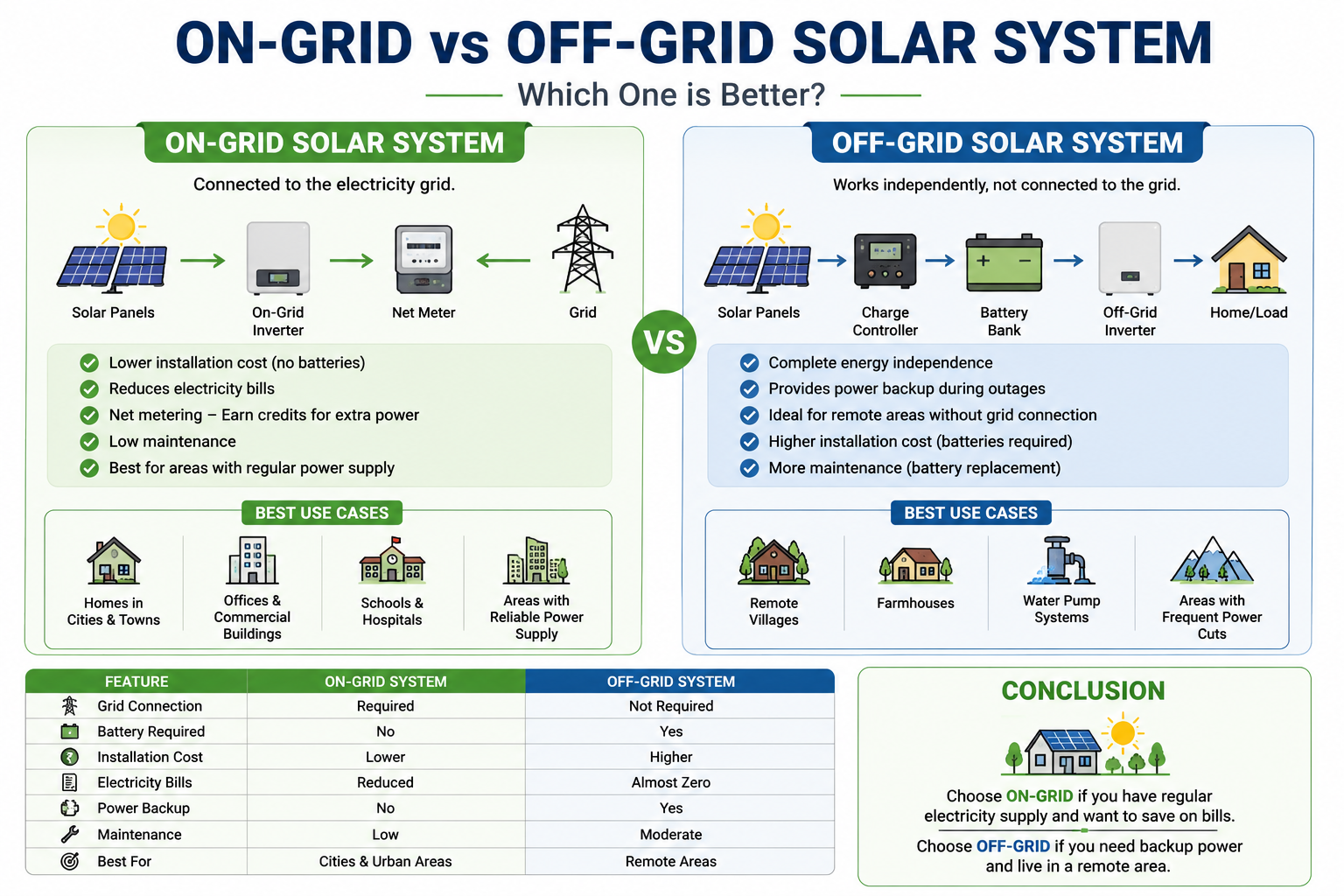
On-Grid vs Off-Grid Solar System: Which One is Better?
"Choosing the right solar system depends on your electricity needs and location. On-grid solar systems are ideal for reducing electricity bills in areas with stable grid supply, while off-grid systems provide reliable backup power and energy independence in remote locations. Understanding the difference between both systems helps homeowners and businesses make a smart and cost-effective solar investment."
On-Grid vs Off-Grid Solar System: Which One is Better?
Both systems have their own advantages and are designed for different needs. In this blog, we will compare on-grid and off-grid solar systems in simple language to help you choose the right option.
What is an On-Grid Solar System?
An on-grid solar system is connected to the electricity grid. It generates electricity from solar panels and uses the grid when additional power is needed.
If the solar system produces extra electricity, it can be exported to the grid through net metering.
Main Components:-
Solar panels
-
Solar inverter
-
Net meter
-
Electricity grid connection
Simple Example:
During daytime, your home runs on solar energy. At night, electricity is supplied from the government grid.
Benefits of On-Grid Solar System
1. Lower Electricity Bills
On-grid systems help reduce electricity bills significantly by using solar energy during the day.
2. Net Metering Benefits
Excess electricity can be sent to the grid, and you receive credits on your electricity bill.
3. Lower Installation Cost
Since batteries are not required, on-grid systems are more affordable.
4. Low Maintenance
These systems are simple and require less maintenance compared to battery-based systems.
Best Use Cases for On-Grid Systems
On-grid solar systems are ideal for:-
Homes in cities and towns
-
Offices and commercial buildings
-
Schools and hospitals
-
Areas with reliable electricity supply
What is an Off-Grid Solar System?
An off-grid solar system works independently and is not connected to the electricity grid. It stores electricity in batteries for use during nighttime or power cuts.
Main Components:-
Solar panels
-
Solar inverter
-
Battery bank
-
Charge controller
Simple Example:
A farmhouse in a remote village without electricity connection uses solar panels and batteries for complete power supply.
Benefits of Off-Grid Solar System
1. Complete Energy Independence
The system works without depending on the electricity grid.
2. Power Backup During Outages
Batteries provide electricity even during long power cuts.
3. Useful for Remote Areas
Ideal for locations where grid electricity is unavailable or unstable.
Limitations of Off-Grid Systems-
Higher installation cost due to batteries
-
Battery replacement after several years
-
More maintenance compared to on-grid systems
Best Use Cases for Off-Grid Systems
Off-grid solar systems are suitable for:-
Remote villages
-
Farmhouses
-
Water pumping systems
-
Areas with frequent power cuts
-
Locations without grid connection
On-Grid vs Off-Grid Solar System Comparison
| Feature | On-Grid System | Off-Grid System |
|---|---|---|
| Grid Connection | Required | Not Required |
| Battery Required | No | Yes |
| Installation Cost | Lower | Higher |
| Electricity Bills | Reduced | Almost Zero |
| Power Backup | No | Yes |
| Maintenance | Low | Moderate |
| Best For | Cities & Urban Areas | Remote Areas |
Which Solar System is Better?
The answer depends on your electricity needs and location.Choose On-Grid Solar If:
- You have regular electricity supply
- You want to reduce electricity bills
- You need a cost-effective solution
- You want government subsidy and net metering benefits
Choose Off-Grid Solar If:
- Your area has frequent power cuts
- There is no grid connection available
- You need backup power
- You live in a remote location
Conclusion
Both on-grid and off-grid solar systems offer clean and renewable energy solutions. The right choice depends on your budget, power requirements, and electricity availability.
An on-grid system is best for saving electricity bills in areas with stable grid supply, while an off-grid system provides complete energy independence in remote locations.
Before installing a solar plant, consult a professional solar EPC company to choose the most suitable system for your home or business.